Ahead of BIGBANG’s comeback, Taeyang released a solo album first. QUINTESSENCE. The title means “essence.”
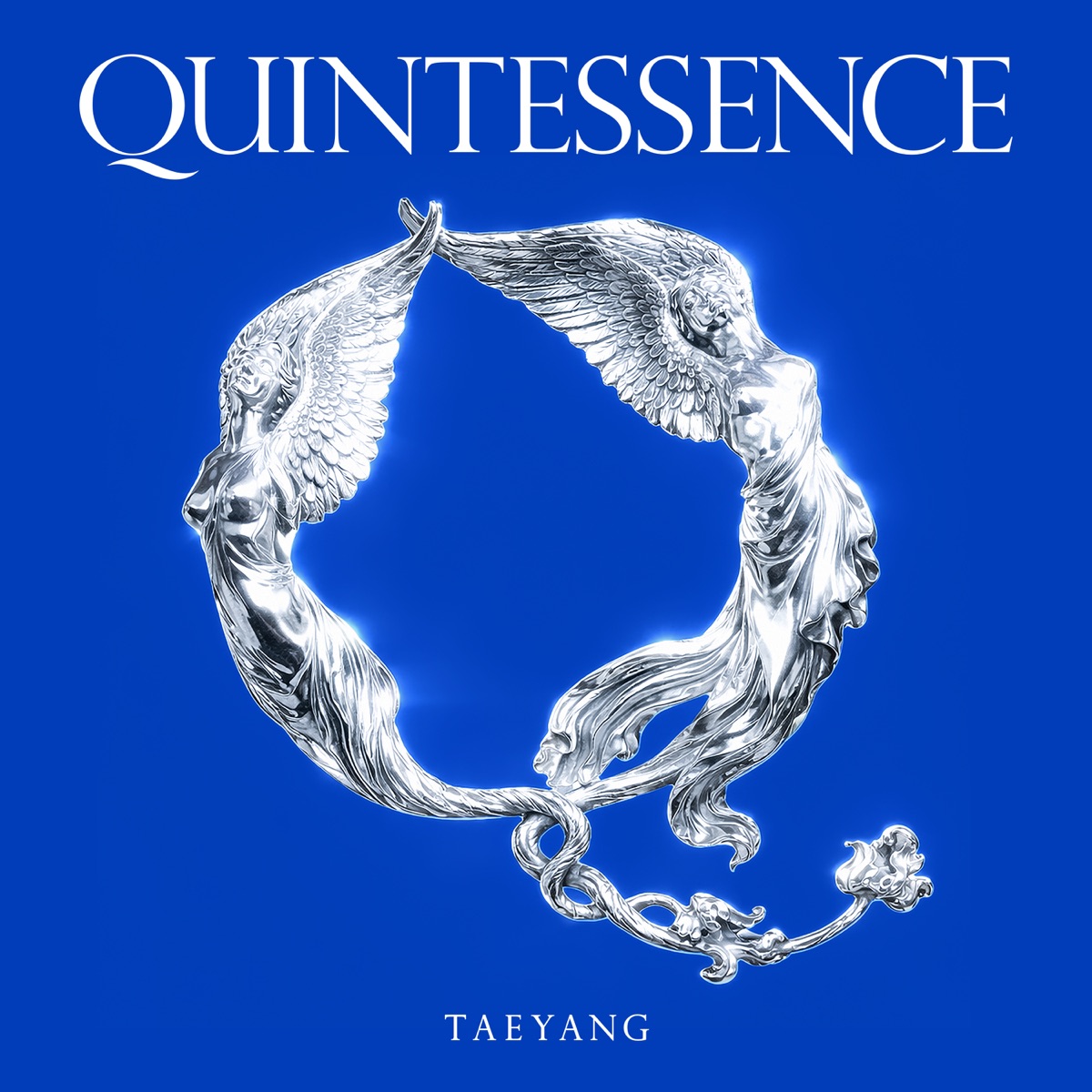
Over the past few years, Taeyang had been changing, little by little. His music had grown broader, and his sound more contemporary. So I naturally expected to encounter a “new Taeyang” on this album.
I pressed play on Spotify. The first track, “BAD.” A powerful beat and modern production. He’s still very much of the present.
The second track, “Live Fast Die Slow.” The album opened up a little further. The sound became freer, and genre no longer seemed to contain Taeyang. This album is heading in quite a new direction, I thought.
And then came the third track. “Would You.” That was where all my expectations stopped.
The keyboard opens up the space first. Taeyang doesn’t rush to fill it. He takes a breath, then quietly steps into the song. As the chorus approaches, the instrumentation gradually grows. And then something strange happens. The sound gets bigger, yet the emotion turns inward.
And at that very moment, an old name surfaced in my mind.
Cho Yong-pil.
I stopped the music. Why? Why Cho Yong-pil, now?
That evening, I listened to “Would You” three more times. I listened again the next day. Still, no answer came. If anything, the question only grew clearer.
Why was I hearing Cho Yong-pil while listening to Taeyang?
The Voice
At first, I thought it was the vocals. So I listened to Taeyang and Cho Yong-pil back to back.
Taeyang is a nuanced vocalist rooted in R&B, while Cho Yong-pil is a singer who developed a vocal style entirely his own across rock and pop. Yet at some point, certain passages in Taeyang’s songs began to bring Cho Yong-pil to mind.
Taeyang’s recent singing, in particular, uses less ornamentation than before. There are more moments when he drives the emotion upward with a firm, full voice, and that change has made the texture of his voice more distinct. It is there that Cho Yong-pil sometimes seems to overlap with him.
Both singers have distinctive tonal colors in which head resonance and nasal resonance blend naturally. Even as they move into the upper-middle register, neither simply forces the voice upward. Rather than stretching a note higher, they seem to compress it first, then send it forward. The quality becomes especially noticeable in the way they shape vowels such as “ee” and “eh.”
Among singers in Korea, there is an expression: jabaseo bureunda — literally, “to hold the sound as you sing.” Rather than letting a note simply flow out, the singer keeps its center firm and sends the sound forward. Both Taeyang and Cho Yong-pil share that quality. Their primary vocal ranges are not vastly different either. At certain moments, they can leave a strikingly similar impression.
But that raises another question. There are many singers with similar vocal techniques. Many singers share similar ranges. So why, out of all of them, did Cho Yong-pil come to mind?
Perhaps the answer lies somewhere deeper than the voice.
Essence
After spending several days with that question, I found myself looking again at the album’s title. QUINTESSENCE. “Essence.”
At first, I thought the title was a declaration of a new Taeyang. A new sound. A new genre. A new experiment.
But the more I listened to the album, the more I began to think the opposite was true. This was not an album trying to create a new Taeyang. It was an album that took what was most essentially Taeyang and pushed it all the way.
The production had changed. The sound had expanded. His expression had shifted in subtle ways. But what lingered in my ears was not the change. It was the way Taeyang had always sung. The way he sings about love. The way he sings about hope. The way he tries, to the very end, to persuade people with one human voice.
The surface had changed, but at the core, he was the same.
That was when the title QUINTESSENCE finally began to make sense to me. Rather than changing his center in order to make something new, he pushes further into his own essence while continuing to engage with a new era. That is how he remains of the present.
Those who go deepest into their essence ultimately become the newest.
The reason I heard Cho Yong-pil in Taeyang was the way these two musicians approach making music.
Beyond One Person, a Language
BIGBANG’s Taeyang and Cho Yong-pil debuted in different eras. They made different music and stood on different stages. And yet, why did I keep moving back and forth between the two?
Perhaps because, in the end, they were speaking the same language.
The language I mean here is not Korean. It is not rock, R&B, or ballad.
It is a way of borrowing the grammar of music that came from the West, yet ultimately singing the time and emotions one has lived through in one’s own voice. A way of becoming new not by changing oneself for the sake of novelty, but by understanding one’s own essence more deeply.
That was when I finally understood. What I had been hearing was not two musicians. It was a language that Korean popular music had spent decades creating.
Taeyang was speaking that language in the present day, and Cho Yong-pil had spoken the same language in his own time.

Perhaps, then, I had not encountered Cho Yong-pil while listening to Taeyang. Perhaps I had encountered that language again.
Once my thoughts had reached this point, I found myself imagining a stage. I hope that someday Taeyang will sing a Cho Yong-pil song again in his own way.
Those who hear that performance might say they had heard not simply one singer performing another singer’s song, but a moment when a musical language passed from one generation to another.
What I encountered while listening to QUINTESSENCE was also not one person’s voice, but a musical language that had been carried across generations.
Which leaves one question. When did the language of Korean popular music begin? Why did Korean popular music, even as it absorbed music from the West, ultimately develop a language of its own? And what role did Cho Yong-pil play in that process?
In the next piece, I will follow six songs by Cho Yong-pil and look for answers to those questions.
How did Korean popular music create a language of its own?