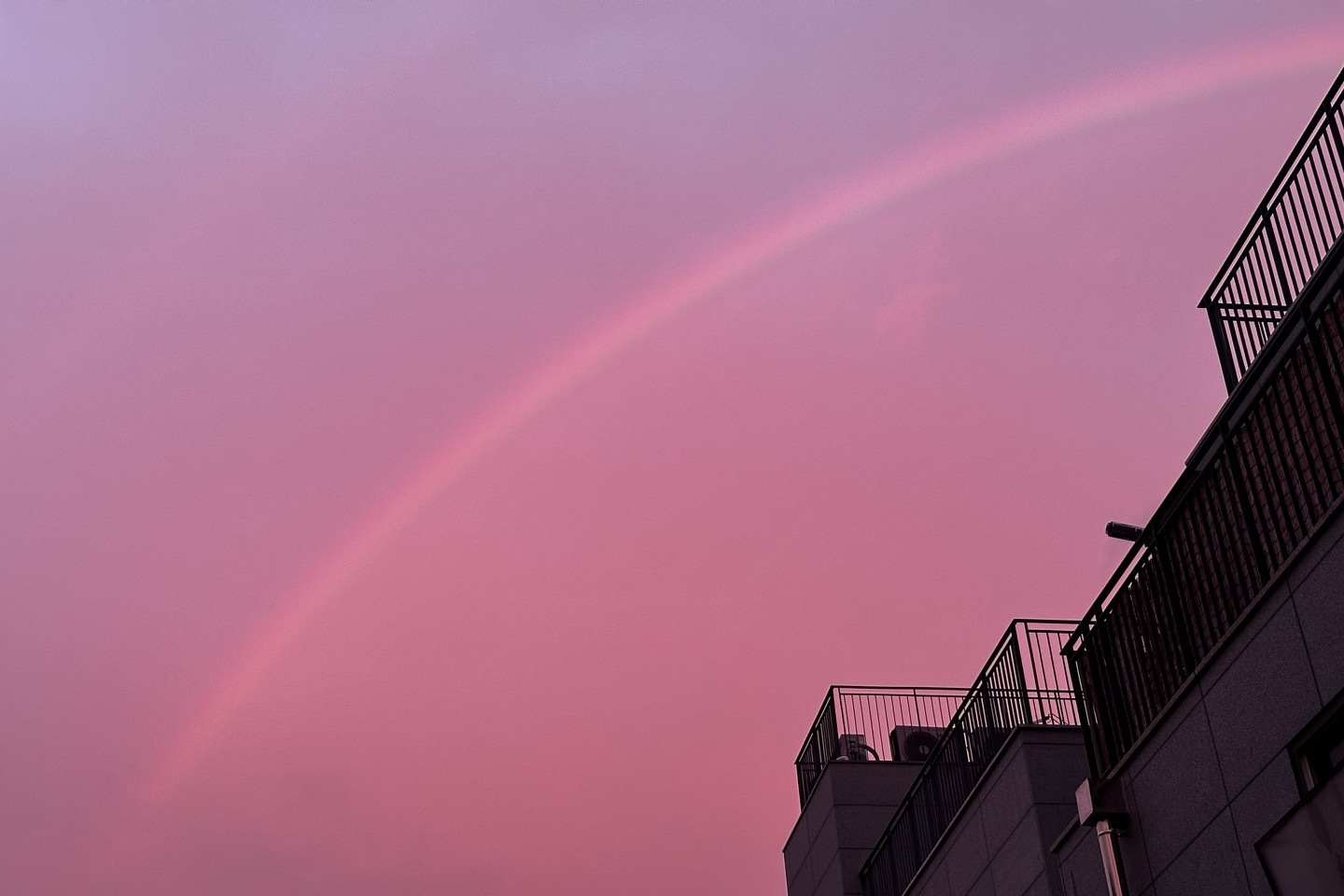
2002 was an unforgettable and terribly difficult year for me. After battling cancer for several months, my mother suddenly passed away, and our entire family fell apart emotionally. The only comfort I found came from spending time with friends who shared my taste in music. We would bring a few CDs by our favorite artists, meet at the bus terminal, share a pair of earphones, and ride all the way to the end of the line, listening to music, crying and laughing together. Those moments were my only comfort. It was all rather melodramatic, in the way only a teenage girl can be. But more than twenty years later, the music I listened to back then remains among my all-time favorites, and I still return to it often.
Before my mother passed away, my music library consisted almost entirely of Western pop. There was a record store in Apgujeong called Sanga Records, famous for stocking imported albums that were hard to find in Korea. Whenever I had some allowance money, buying records I couldn't easily find elsewhere was one of my greatest pleasures. Then, around 2002, my musical tastes began to change. My trips to Apgujeong gave way to visits to Hyang Music in Sinchon, where I began discovering a whole new world of music. Hyang Music was a legendary record store that introduced listeners to countless Korean indie bands. I listened to more indie music than I could possibly remember during those years, but one song has stayed with me as something far more than a memory, far more than comfort. Cho Kyu-chan's “Rainbow.”
“Rainbow” is the opening track and title song of Cho Kyu-chan's 2002 best-of album, Rainbow. It was a new recording of the song that had won him the Gold Prize at the Yoo Jae-ha Music Competition, with a fresh arrangement and a new vocal performance. I still remember the thrill and emotion of hearing his voice enter over the opening piano for the first time. And perhaps that was only natural. I had been so immersed in Western music that I had listened almost exclusively to pop songs. I knew there was a singer named Cho Kyu-chan, but I had never really listened to his music.
Cho Kyu-chan first made his name in 1989 with “Rainbow,” which won the Gold Prize at the inaugural Yoo Jae-ha Music Competition. Beyond his many remarkable songs, he is also known for his work as a vocal-directing partner to Lee Sora and for his exceptional sensibility as a backing vocalist, both on his own recordings and on those of other artists. Some notable examples include Yoon Jong-shin's “Rebirth,” Lee Moon-sae's “Early Morning Discount,” and Park Jin-young's “She Was Pretty.” To my ears, his backing vocal lines are so perfectly crafted that they bring to mind the Bee Gees or Babyface.
Ironically, though, the opening track of his best-of album, “Rainbow,” has none of those elaborate backing vocals. What remains is simply his voice and lyrics that reflect his childhood. “Pale morning sunlight.” Friends calling his name. With just a few words, it felt as though the very air of another time was unfolding before my eyes. I was astonished that someone could weave such deeply personal memories into melody and lyrics so naturally, and move the listener so profoundly. The instrumental arrangement was just as remarkable: the piano, synthesizer, and guitar solo all seemed to fall perfectly into place. At the time, the song left me both stunned and deeply moved.
I actually majored in vocal performance at university, and I continued listening to Cho Kyu-chan throughout those years. Yet the songs I sang myself were nothing like his music. I didn't understand it at the time, but looking back, I think I considered his music and my own singing to be two entirely separate things. Why was that? Back then, I thought singing had to make people say, “Damn, that person can sing!” It had to be the kind of performance that made anyone listening want to burst into applause. In today's language, it had to deliver a massive dopamine hit. Cho Kyu-chan's music, on the other hand, seemed almost divine to me. I couldn't imagine reproducing that feeling and emotion simply by singing his songs myself. I had drawn a clear line between the music I listened to and the music I performed. I'm not saying one approach was right and the other wrong. Popular tastes in vocal performance reflected the times, and everyone's preferences are different. I respect the choices I made back then, too.
But if someone were to ask me now the deceptively simple question, “What is music to you?” I would probably pretend to hesitate for a moment before answering that, ultimately, music is something that brings comfort. And that comfort isn't limited to any particular genre. If someone told me they burst into tears every time they heard Linkin Park's “In the End,” I'd respect that, too. Haha. After all, what comforts us, and when we need that comfort, differs enormously from person to person.
When I first heard “Rainbow,” I was deeply shaken and withdrawn. I can't say that this song healed everything I was going through. But for those four minutes and forty-three seconds, I could lose myself in another world. It wasn't about avoiding reality. It was simply a way of finding comfort, however small, in those few minutes. That's why I played Cho Kyu-chan's best-of CD until it started skipping. If I go back even further, there was also a time when we used to put stretched-out cassette tapes in the refrigerator. But I'll stop there.
Now that I've written all this, I feel a little sad that I may have made Cho Kyu-chan's “Rainbow” sound like such a simple, unremarkable song. But I believe that sharing a song through even the most private corners of one's inner life can be one of the most sincere ways to introduce it. And that sincerity may reach someone. Perhaps what allows music to endure, in the end, is the memories each of us carries.
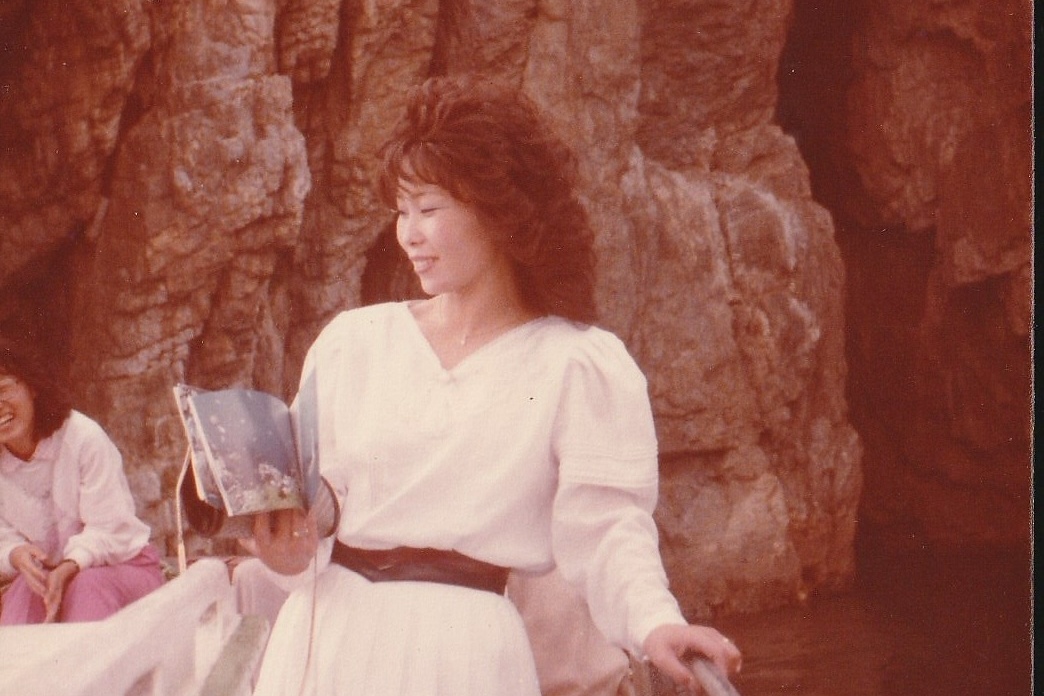
When I was little, my mother was an extraordinary cook. Even now, whenever I catch a scent that reminds me of her cooking, I feel as though I've been transported straight back to those days. Perhaps music works in much the same way. Just as smells and tastes linger like spirits, waiting for the moment they can awaken a memory, music too has a mysterious and wonderful way of reminding us who we once were and helping us recover lost time. That's what Cho Kyu-chan's “Rainbow” is to me. Something strange and almost magical.
If you've read my story and found even a small part of yourself in my past, I hope you'll give this song a listen. “I kept following a rainbow that stayed out of reach, no matter how far I went.” Now that we know we can never catch that rainbow, no matter how far we chase it, I hope this song can be the soundtrack as we revisit the time we've lost.
Cho Kyu-chan — “Rainbow”
Cho Dong-ik — “Mom and the Church”